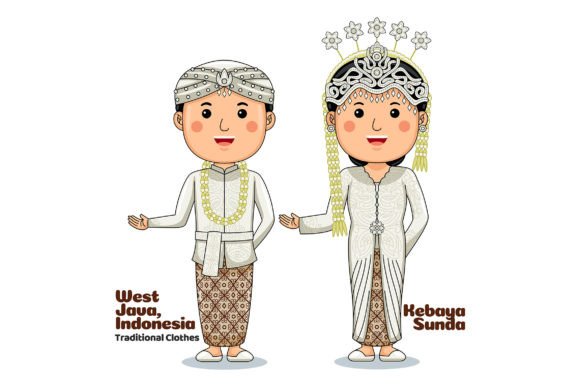
West Java Traditional Cloth Welcome 01: A Vector Resource for Modern Branding
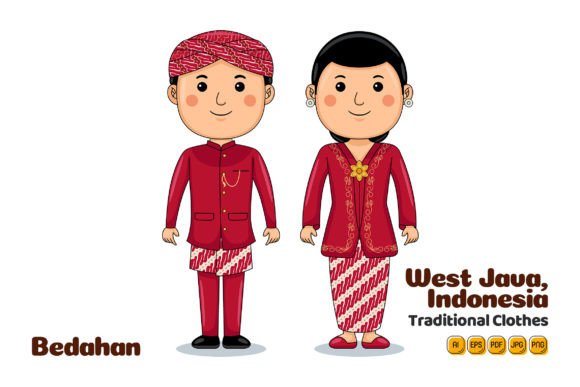
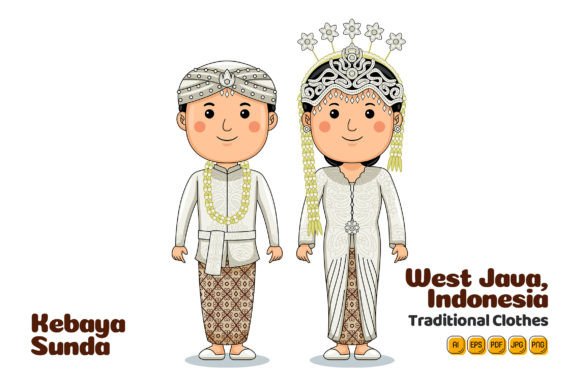
In the realm of digital design resources, finding assets that offer both cultural authenticity and modern flexibility can be a challenge. West Java Traditional Cloth Welcome 01 presents a specific solution: a collection of 100 vector illustrations inspired by the traditional textiles of West Java, Indonesia, packaged for contemporary commercial and creative use. This resource is not merely a set of decorative images; it is a toolkit designed for adaptability, allowing designers and businesses to incorporate traditional motifs into a wide array of projects without the constraints of pre-made, static imagery.
What Distinguishes This Vector Collection
West Java Traditional Cloth Welcome 01 is defined by its foundational concept and technical execution. The core inspiration draws from the intricate patterns and symbolism found in West Java's traditional cloth, such as Batik and Tenun. These patterns often carry historical and cultural significance, representing local philosophy, nature, and community. However, this collection translates these traditional elements into a flat design style, simplifying the complex motifs into clean, scalable vector shapes. This creates a bridge between heritage and modern minimalist design trends.
The primary distinction lies in its format and editability. Unlike purchasing a single, fixed JPEG of a pattern, you receive 100 individual vector elements in EPS format, compatible with Adobe Illustrator and other vector editing software. Each shape is separate, not locked into a single composition. This means you are not just buying a picture; you are acquiring the building blocks to create your own illustrations. The high resolution (5000 x 5000 pixels) and vector nature ensure that resizing—from a tiny social media icon to a large-format banner—does not degrade quality. The ability to change the color of every single element is a critical feature, allowing the palette to be adapted to any brand’s color scheme, moving beyond the traditional earthy or vibrant colors often associated with the source material.
Evaluating Use Cases and Practical Applications
When considering a design resource, its versatility across different media is a key decision factor. The applications for West Java Traditional Cloth Welcome 01 are broad, but its suitability depends on your specific project goals.
Strengths for Integrated Branding and Marketing
For businesses or organizations seeking to establish a brand identity with a unique, culturally-informed aesthetic, this collection offers significant strengths. The 100 elements can be combined and customized to create logos, mascots, or recurring graphical themes for a website, landing page, or promotional banner. For instance, a eco-tourism company in Indonesia could use select motifs to design a visual identity that feels locally rooted yet contemporary. Similarly, a cultural education platform could use these vectors in infographics to explain textile patterns, where each shape can be colored and labeled separately. The easy customization facilitates consistency across all touchpoints—social media posts, printed brochures, and digital ads can share a coherent visual language derived from the same asset set.
Tradeoffs Compared to Other Design Approaches
It’s useful to compare this approach to alternative ways of achieving a similar visual goal. One common alternative is hiring a designer to create custom illustrations from scratch. This offers unlimited originality but at a higher cost and longer timeline. West Java Traditional Cloth Welcome 01 sits in a middle ground: it provides a starting framework of culturally-specific motifs that drastically reduces the initial design time, while still allowing deep customization. You are not getting a fully bespoke piece, but you are getting a highly adaptable foundation.
Another comparison is with stock photography or pre-composed illustration packs featuring traditional patterns. These are often final, rasterized images (JPG/PNG). While they might be immediately usable as a background, they offer minimal flexibility for integration with other brand elements. You cannot easily isolate a single motif from the pattern to use as an icon. The vector collection addresses this limitation directly. The included JPG files serve as high-resolution previews or for quick use, but the EPS vectors are where the true editorial power resides.
The tradeoff, however, lies in the required skill and tools. To fully exploit this resource, you or your designer need access to and proficiency with vector editing software like Adobe Illustrator. If your workflow is entirely based on simpler tools that only handle raster images, the core value of the vectors might be inaccessible, making the JPGs your primary, less flexible asset.
Identifying the Best-Fit Situations and Limitations
West Java Traditional Cloth Welcome 01 is likely the right choice in several specific scenarios. If you need a scalable, color-adjustable asset pack to support a long-term branding project that values cultural motifs, it is a strong candidate. It is also a fit for designers who regularly create materials for clients in related fields—cultural heritage, tourism, fashion, or education—and want a reusable, professional-quality toolkit to streamline their work. The “create your own illustrations” capability makes it ideal for projects requiring a series of related but distinct graphics, such as a set of social media posts for a campaign.
There are, naturally, situations where another option might be preferable. If your project requires photographic realism or 3D textures, this flat vector style is not appropriate. If you need illustrations depicting specific scenes or people, this collection of abstracted textile shapes will not suffice. Furthermore, if your brand identity requires motifs from a different specific culture (e.g., Celtic knots or Navajo patterns), this West Java-inspired collection would be a mismatched choice, despite its technical flexibility. The cultural specificity is an inherent part of its value, but also a boundary.
Decision Factors for Potential Users
When evaluating this resource against your needs, consider these practical factors:
- Project Scope: Are you building a single one-off graphic or a comprehensive, multi-platform visual system? The latter benefits more from the collection's breadth.
- Design Capacity: Do you have the software and skills to edit EPS vector files? If not, the value proposition shifts significantly.
- Aesthetic Alignment: Does the flat, geometric interpretation of traditional cloth patterns align with your desired brand feel? Some may prefer a more ornate, detailed, or watercolor style.
- Cultural Relevance: Is the connection to West Java tradition a positive, neutral, or irrelevant aspect for your audience? For some projects, it’s a meaningful advantage; for others, it might simply be a pleasing pattern with no deeper connection required.
- Budget and Time: Compared to fully custom design, this is often a cost-effective middle path. Compared to free generic vector packs, it offers unique thematic coherence but at a purchase cost.
The Balance of Customization and Coherence
A central benefit of West Java Traditional Cloth Welcome 01 is the balance it offers between creative freedom and cohesive starting material. You can create countless variations, which is essential for standing out in crowded digital spaces. However, because all 100 elements derive from a common cultural design language, even heavily modified combinations—with changed colors and rearranged shapes—will retain an underlying visual harmony. This prevents designs from becoming chaotic or disjointed, a risk when piecing together disparate assets from multiple sources.
In practice, a designer might take a few leaf and rhombus shapes from the pack, color them in corporate blues and grays, and assemble them into a unique background pattern for a website header. Simultaneously, they could isolate a single, smaller motif from that pattern, recolor it in a contrasting accent color, and use it as a recurring bullet point icon throughout the site’s content. This demonstrates efficient, consistent use of the same resource across different scales and purposes.
Ultimately, resources like West Java Traditional Cloth Welcome 01 exist to solve specific problems in the design workflow: the need for unique, scalable, and editable graphics that carry a thematic depth. By understanding its distinct format, comparing it to the common alternatives of custom work or static stock images, and honestly assessing your project’s requirements against its strengths and limitations, you can make a more informed decision about whether this vector toolkit aligns with your creative or branding objectives. Its value is not universal, but for situations where its particular blend of cultural inspiration and digital flexibility fits, it can be a remarkably practical foundation for a wide spectrum of visual projects.