The Modern Barcode: From Inventory Symbol to Essential Design Element
In the world of commerce and digital communication, certain symbols transcend their original purpose to become icons of an era. The barcode is one such symbol. Originally a purely functional tool for inventory management and retail logistics, its stark, modular aesthetic has evolved. Today, it represents efficiency, data, and connectivity. Its visual language has permeated our culture, finding new life as a powerful design asset for creative professionals.
The Evolution of the Barcode Beyond the Scanner
The journey from utilitarian stripes to a recognized visual motif is a story of digital transformation. In a landscape saturated with overtly decorative graphics, the barcode stands out for its inherent minimalism and geometric precision. This aligns perfectly with contemporary design trends that favor clarity, data visualization, and a blend of the digital and physical worlds. For audiences accustomed to clean interfaces and meaningful symbolism, the barcode communicates a message of streamlined process and embedded information, making it a compelling choice for modern projects.
This shift is also a response to changing user expectations. Whether browsing an e-commerce site or viewing a corporate presentation, audiences now subconsciously appreciate design that feels smart and integrated. A thoughtfully placed barcode graphic can suggest innovation, tech-savviness, and a business that values backend efficiency as much as front-end beauty. It’s a nod to the infrastructure that powers our seamless shopping experiences and data-driven workflows.
Practical Implications for Creators and Businesses
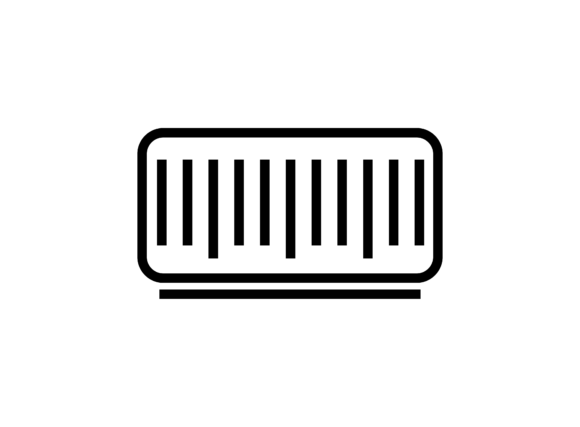
For the designer, marketer, or entrepreneur, incorporating a barcode into visual materials is no longer just about representing a product SKU. It’s about harnessing its aesthetic and conceptual weight. A beautiful, meticulously designed e-commerce icon that utilizes the barcode form can serve multiple strategic purposes. It can act as a universal signifier for “transaction,” “product,” or “digital inventory” within an interface. On printed materials, it bridges the tangible and the digital, suggesting that a physical brochure or business card connects to a richer online ecosystem.
Integrating Barcode Design into Diverse Media
The versatility of a high-quality barcode icon is its greatest asset. Consider these practical applications across your projects:
- Website & UI Design: Use it as a subtle background element on checkout pages, as part of a custom icon set for admin dashboards, or as a decorative accent in headers for tech-focused brands. Its structure naturally complements grid-based web layouts.
- Printed & Promotional Materials: Incorporate it into flyers, posters, or packaging for companies in retail, logistics, or tech. It adds a layer of conceptual depth without clutter, appealing to a professional audience.
- Presentations & Infographics: In slides detailing supply chain improvements or data flow, a clean barcode icon visually reinforces the topic. It serves as an immediate, recognizable anchor for complex information.
- Illustrations & Broad Design Projects: Its linear pattern can be a foundational graphic element in larger compositions, representing themes of connection, order, or modern commerce.
The Importance of Quality in Downloadable Design Assets
To achieve these effects, the quality of the source graphic is paramount. A design asset provided in multiple formats—like a package containing 1 SVG, 1 PNG, 1 JPEG, and 1 EPS—empowers the professional. The SVG ensures infinite scalability without loss of quality for web and responsive design. The high-resolution 300dpi PNG and JPEG guarantee crisp results in both digital and print contexts, from high-detail mockups to printed brochures. The EPS file remains a staple for compatibility with various vector editing software, ensuring the design can be adapted or integrated into larger vector works seamlessly.
This multi-format approach directly supports modern, hybrid workflows where a creator might jump from web design software to a print layout program to a presentation tool. Having the right file for the right medium eliminates technical friction, allowing the focus to remain on creative application and message.
Moving Forward with Purposeful Symbolism
As digital and physical experiences continue to merge, the symbolism we use must carry dual meaning. The barcode is uniquely positioned to do this. For businesses, it’s a reminder to value the robust systems that enable customer satisfaction. For designers, it’s a challenge to find beauty in functional forms and to repurpose familiar symbols with intention.
The key is to use it thoughtfully, not generically. Its inclusion should feel relevant to the content—enhancing a story about efficiency, innovation, or commerce. Avoid using it merely as a trendy placeholder; instead, let its history and its modern resonance inform your design choices. When a beautiful, meticulously designed e-commerce icon based on the barcode is deployed with this understanding, it becomes more than a graphic. It becomes a concise visual statement about how we live, work, and connect today.